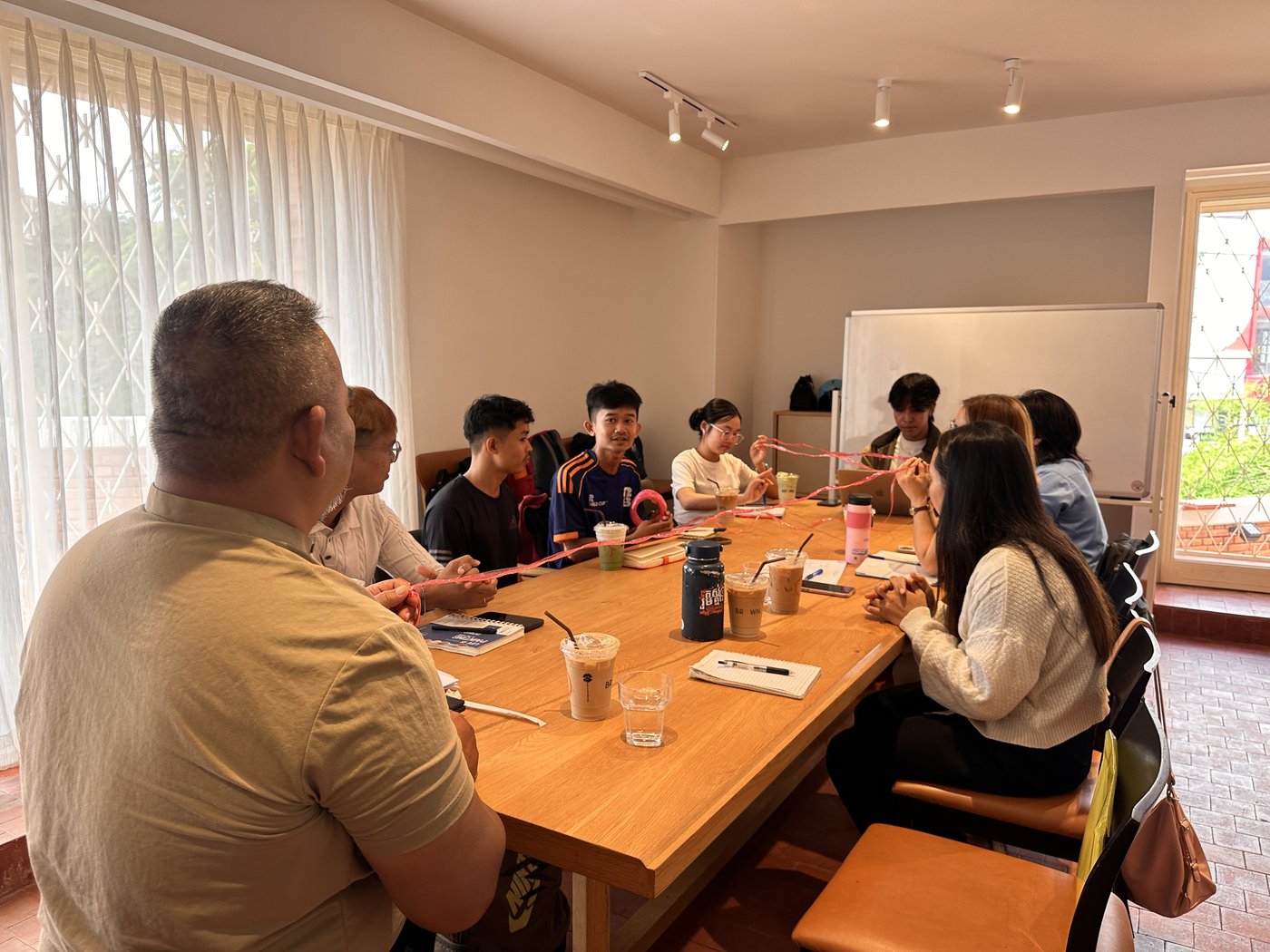
On July 25, 2026, NIPA partnered with Women Peace Makers (WPM) Cambodia to host a Men's Dialogue at Brown Cafe in Phnom Penh, bringing together 12 young men to explore the "Do No Harm" (DNH) approach and what it means in peacebuilding, humanitarian work, and everyday life.
The session opened with a simple icebreaker: a length of red string passed hand to hand around the table as participants introduced themselves and made their first connections with one another. It set an open, trusting tone that carried through the rest of the discussion.
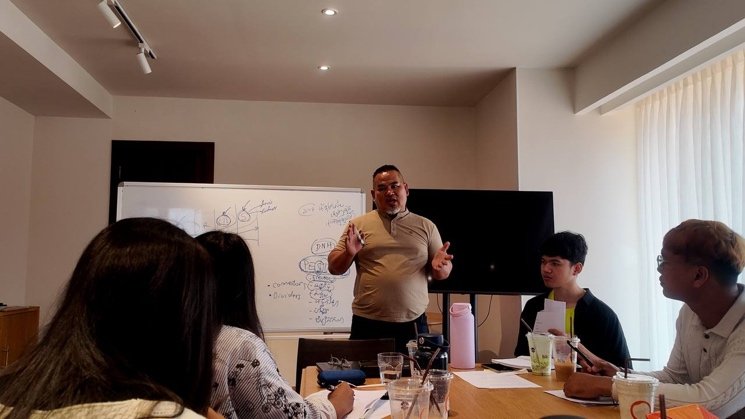
Mr. Som Chanmony facilitates the session.
Observation vs. evaluation
Working in pairs, participants examined a case study and practiced separating observation — the facts of what actually happened — from evaluation, their own opinions and interpretations of it. It's a small distinction that turned out to carry a lot of weight: recognizing it helps people catch their own assumptions before those assumptions turn into judgment.
Mr. Som Chanmony connected this back to Do No Harm directly, walking through how planned and unplanned consequences, and positive and negative impacts, all need to be weighed before acting — whether that's delivering aid or just responding to someone in the room.
What participants took away
The reflections that came out of the session were personal as often as they were analytical:
Others spoke to how new the framework was for them. Yado, attending his first Do No Harm session, said it noticeably shifted how he thought about the concept and its everyday use. Pheawin pointed to the importance of reading context and background before offering support or opinions — a thread that ran through much of the group's discussion.
Key impacts
- A clearer, shared understanding of the Do No Harm framework and its relevance to peacebuilding and community work.
- Sharper ability to separate factual observation from personal evaluation, supporting more objective decisions.
- Greater awareness of unintended consequences before taking action or offering support.
- More practice with empathy, respectful communication, and inclusive approaches across backgrounds.
- More confidence among participants to carry these principles into daily life, work, and their communities.
Overall, the session strengthened participants' grasp of conflict-sensitive approaches and gave them a concrete way to carry Do No Harm principles into future peacebuilding work — and into the everyday interactions that make that work possible.
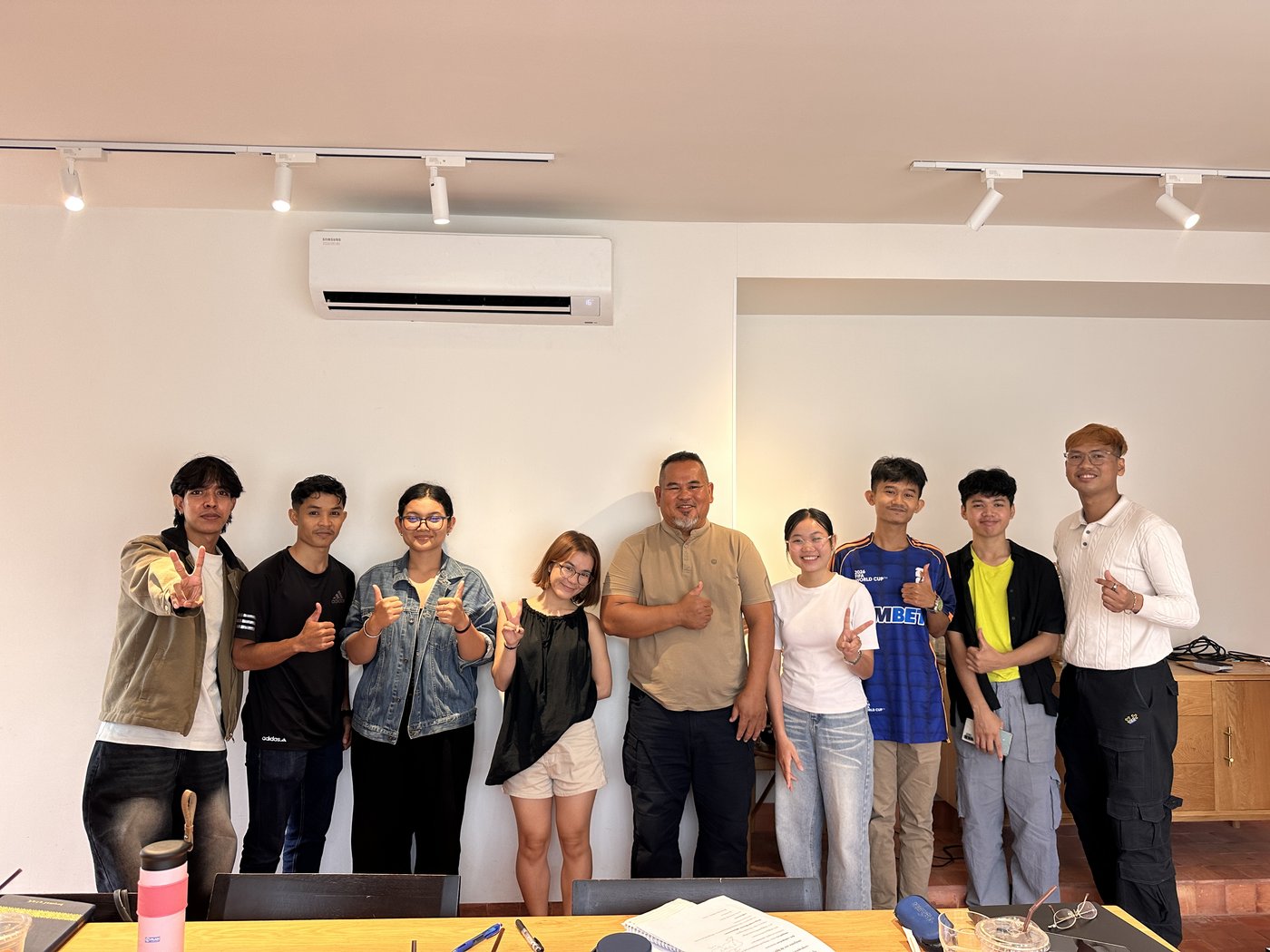
Participants and facilitators after the session.