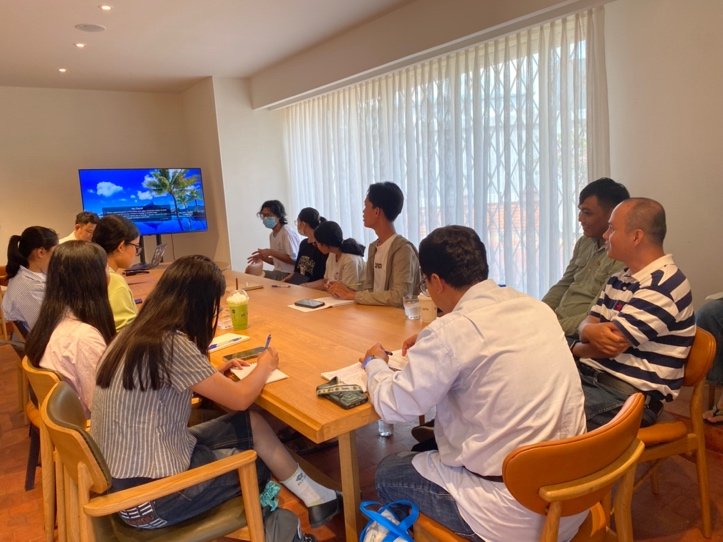
“Boys don't cry.” “Men have to provide.” “Housework is a woman's job.” These are the kinds of messages many Cambodians grow up absorbing without ever questioning them. At Brown Cafe in Phnom Penh, sixteen participants spent a day doing exactly that — questioning them, out loud, together. The occasion was a Peace Café session hosted under the GROWTH-II project, and the topic was as timely as it is uncomfortable: transforming masculinity and confronting gender-based violence (GBV).
Rather than a one-way lecture, the day was built around exchange — introductions, presentations, and an open floor for questions — giving participants room to bring their own experiences of rural Cambodia, migration, and family life into the discussion.
Setting the tone
The session opened with the guest speaker introducing himself, followed by participant introductions designed to break down barriers between people from different backgrounds. From there, participants named what they hoped to get out of the day: a clearer understanding of masculinity and violence, practical strategies for peaceful conflict resolution, insight into what drives violence in rural communities, and ideas for engaging youth in GBV advocacy.
The weight of “should”
Much of the conversation centered on the unwritten rules Cambodian society hands to boys and girls from an early age. Participants pointed to familiar scripts: boys should always be strong and should never cry; men should be the ones financially supporting the family; household work belongs to women. These beliefs, participants agreed, quietly shape unequal opportunities later in life — in education, family expectations, and career paths.
The discussion also turned to labor migration — particularly Cambodians who travel to Thailand for work — and the risks that follow. Without legal documentation or adequate protection, migrant workers become especially vulnerable when they experience crime or exploitation, with little recourse when things go wrong.
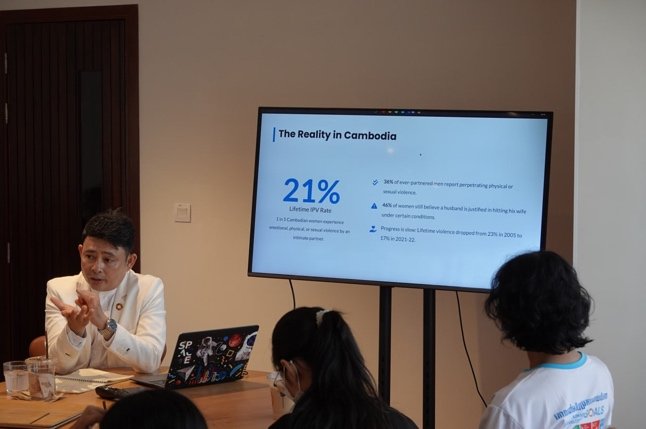
The "Transforming Masculinity" presentation grounded the discussion in data.
The numbers behind the conversation
The "Transforming Masculinity" presentation grounded the discussion in data, both global and local:
- Globally, 1 in 3 women experience violence in their lifetime.
- In Cambodia, 1 in 5 women experience emotional, physical, or sexual violence from an intimate partner.
- Many cases go unreported, held back by social stigma and normalized beliefs about what counts as "normal" behavior.
The speaker made the case that education is one of the most powerful levers for change. Comprehensive Sexuality Education (CSE) for grades 5 through 12 was highlighted as a critical tool — teaching young people about consent, healthy relationships, and GBV prevention before harmful patterns take hold. Participants agreed that closing the gap between generations matters too: younger and older Cambodians need to work together, even though shifting long-held traditional perspectives is far from easy.
From awareness to action
The session pushed past awareness and into action, encouraging participants to think about three levels of change:
- Internal transformation and self-awareness — starting with how each person sees themselves.
- Peer accountability and bystander intervention — speaking up when something is wrong, rather than staying silent.
- Inspiring social change through education and positive behavior — modeling the change rather than just talking about it.
The floor then opened up for questions, and participants dug into the practical side of these ideas: how to share family responsibilities fairly, what healthy relationships actually look like, expectations around marriage, and how better communication between partners can head off conflict and violence before it starts.
What participants recommend
By the end of the day, participants had their own ideas for carrying the conversation forward:
- Read books to build understanding and encourage self-reflection.
- Talk openly about family roles and share them equally.
- Get involved in social work and community activities.
- Build household schedules and responsibilities together, as a family.
- Promote education and peaceful behavior within communities.
A small room, a bigger shift
Participants left saying the session met many of the expectations they'd walked in with — a clearer sense of how gender stereotypes take root, why GBV persists, and how education and shared responsibility can chip away at both. No single conversation rewrites social norms overnight. But sixteen people in Phnom Penh spent a day naming the "shoulds" they grew up with — and starting to imagine what could replace them.
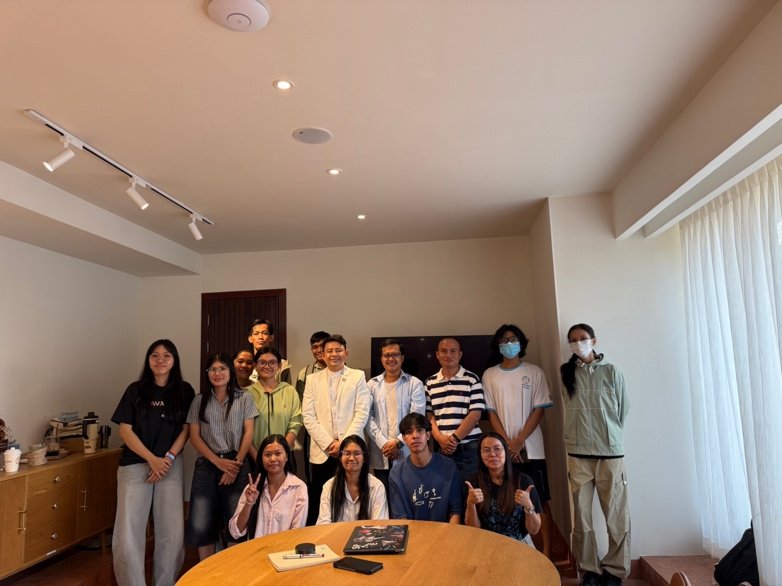
Participants and facilitators after the session.